Welcome to Hollywood Graveyard, where we set out to remember and celebrate the
lives of those who lived to entertain us, by visiting their final resting places.
Today we head back to Hollywood Forever Cemetery, to find such stars as Barbara La Marr,
Ford Sterling, Renee Adoree, and many more. Join us, won't you?
Last year we toured Hollywood Forever, the cemetery with as much character as
many of the stars who rest here. Today we're heading back there to visit some
stars we missed the first time around. If you haven't done so already be sure to
check out our original three-part tour of Hollywood Forever.
We'll begin our tour back at the chapel, by way of the colonnade, which is on the
west side of the chapel. Just as you enter the colonnade, on the left, is the
niche of Elmo Lincoln. His marker is hard to read but as it says, Lincoln was the
first actor to play Tarzan on screen (the adult Tarzan to be accurate). The burly
actor initiated the role in Hollywood's first Tarzan film, Tarzan of the Apes in
1918. The film was a tremendous success and he would reprise the role of the
apeman in The Romance of Tarzan, and in the 1921 serial of The Adventures of Tarzan.
After Tarzan, Lincoln can be seen mainly in bit parts and uncredited roles.
Across from Lincoln, low on the wall, is Ford Sterling. Before Charlie Chaplin and
Harold Lloyd, there was Ford Sterling, one of the most popular screen comedians of
very early Hollywood. He was a major player at Mack Sennett's Keystone
Studios, one of the great comedy studios of the silent era. There he was known as
the original chief of the bumbling Keystone Cops. At Keystone he would
perform alongside other silent legends, like Fatty Arbuckle, Charlie Chaplin, and
Mabel Normand, as the villain in one of the Keystone's most iconic films,
Barney Oldfield's Race for a Life.
He performed in nearly 300 productions before dying
of a heart attack at the age of 55.
Further down this corridor, on the left,
is the niche of Viola Dana. She too was a silent film star who made her screen
debut in 1910 for Edison in A Christmas Carol.
Among her 100-plus films are Bred in Old Kentucky, and Two Sisters. Aside from
a few bit parts in the years to follow Viola retired from the screen in 1929.
She lived to be 90.
Let's head now into the chapel.
In the first column on the right we find the niche of cinematographer Gregg Toland.
He's best remembered, as you may have guessed, for his camera work on
Citizen Kane, considered one of the great achievements in cinematography of the era.
In fact so vital was the role that Toland played in the production of the
film that director Orson Welles shared a title card with him. Other films include
William Wyler's The Best Years of our Lives,
and Wuthering Heights, which won him an Oscar. Toland is considered one of the
most influential cinematographers in film history.
Right next to Toland is a famous parent.
William Gable who was Clark Gable's father.
Sorry this one's also a little hard to read.
Across the room, low on the south wall, we find
the niche of Agnes Ayres. She was a silent film star best remembered today for
starring alongside Rudolph Valentino in his career defining role, the Sheik, in 1921.
She would reprise the role five years later in The Son of the Sheik. She was
also one of Cecil B DeMille early stars, in films like Forbidden Fruit. When her
career began to wane in the late 20s she decided to retire from the screen.
She attempted a comeback in the late 30s, but it wasn't to be.
She died of a cerebral hemorrhage at the age of 42.
Let's head up now to the second level.
Right at the top of the stairs, on the left, is the niche of Charlotte Bridgwood.
She was a stage actress, performing under the name Lotta Lawrence, and was the mother of the
first movie star, Florence Lawrence, who is buried nearby.
And get this: in addition to being actresses, Charlotte and her daughter Florence were both
automotive enthusiasts and inventors. Charlotte is credited with inventing the
automatic windshield wiper, and Florence with developing turn and brake signals on cars.
To the right, in the second column, we find Rozz Williams. He was a
pioneer of American gothic rock and death rock, forming the band Christian Death
in 1979 when he was only 16, a band that paved the way for future artists
like Trent Reznor and Marilyn Manson. After leaving Christian Death, Williams
would perform with Shadow Project, and Premature Ejaculation, as well as solo work.
On April 1st 1998, Williams committed suicide by hanging himself in
his apartment. He was 34. His ashes were scattered at Runyon Canyon Park, and then
a memorial was established here. His fascination with the number 1334 is
evident here, the number inscribed on his urn, and here, the lyrics to his song
December 30th 1334.
[Music]
Also displayed is an original piece of collage art by Williams.
Across the room, next to the window, is the niche of Jesse Lasky Jr. He was a screenwriter
and, as you may have surmised, the son of Jesse Lasky, co-founder of paramount and
producer of hollow his first feature film in 1914. Lasky Jr. is best known
for writing the screenplays for Cecil B. DeMille's biblical epics, Samson and
Delilah, and the Ten Commandments. Also here is Lasky's sister, Betty. She was an
author and film historian who wrote about RKO Pictures.
Further along this wall, right next to Ann Sheridan, is another writer,
Madeline Pugh Davis. She was co-writer and co-creator of I Love Lucy, known as
the girl writer in an industry heavily dominated by men. With writing partner
Bob Carroll Jr. she began writing for Lucille Ball's radio show, and for Ball
and Desi Arnaz on vaudeville. Then came I Love Lucy, one of the most beloved
sitcoms in television history.
It's no exaggeration to say that the success of the show with a female lead
is owed in part to the fact that it had a girl writer. Madelyn wrote for Lucy
spin-offs too - including The Lucy Show, Here's Lucy, etc. Her memoir is titled
"Laughing with Lucy."
Let's make our way back outside, but before we exit there's
one more stop at the entrance of the colonnade. Low, just left of the door, is
Hobart J. Whitley. He was a real estate and land developer in early Southern
California, known as the Father of Hollywood, for his development of
Hollywood, the building of the Hollywood Hotel, inspiring the creation of the
Hollywood Sign, and urging filmmakers like David Horsley to make movies in
Hollywood. He's also the namesake for the swanky
Whitley Heights development in Hollywood, home to some of Hollywood's biggest
stars from Barbara La Marr to Rudolph Valentino.
There are, however, conflicting stories out there as to who exactly came up with
the name "Hollywood," and how. If you saw part two of our original tour you'll
recall that Daeida Wilcox suggested the name Hollywood to her husband, landowner
Harvey Wilcox, who officially recorded the name on the lands deed in 1887.
The story goes that she either heard the name from a fellow train passenger on
the way to Ohio, or she took the name from the California Holly that grew on
the land. After the death of Harvey, Daeida continued to play a significant role
in the development of the town, earning her the moniker the Mother of Hollywood.
But the Whitley's tell a different, slightly more fanciful tale of the
origin of the town's name. According to one account from a journal entry,
HJ Whitley, on his honeymoon with his new bride, Gigi, stood atop the Hollywood
Hills looking out over the undeveloped land below and had a vision of a
spectacular new town. Along came a lone Chinese man singing in his native tongue.
Whitley asked the man, "What are you doing?" to which the Chinese man replied, with a
thick accent, "I holly wood," meaning "hauling wood."
Then in there will Whitley decided that Hollywood would be the name of his new town.
But the cited journal entry, written in third person rather than first person,
reads more like a fictional narrative than a diary, and is the sole source of
this claim. So which is it?
Well... greater historical minds than my own will have
to conclude just who it was that actually named Hollywood.
Back outside at the mausoleum, the first corridor is the Sanctuary of Memories.
Here we find the Peruvian songbird, Yma Sumac.
The exotic singer, who rose to popularity in
the 50s, was renowned for her vocal range of four and a half octaves - from deep and
dark to high and bird-like.
[music]
Let's make our way to the main entrance of the
Abbey of the Psalms.
On the left, just past the entrance, we find the crypt of
Renee Adoree. She was born in France and from a young age joined her parents
performing in the circus. By her teens she was performing on stage and in the
20s began making films in New York and Hollywood. Her breakout role was
alongside John Gilbert in 1925s The Big Parade,
one of the great films of the silent era.
Her career was cut short after contracting tuberculosis in 1930,
dying a few years later at the age of 35.
Further in, on the right wall of the rotunda niches, we find actress Kathleen Freeman.
She was an actress of stage and screen, often playing eccentric
secretaries, teachers, nurses, and nuns, as in sister Mary stigmata in the Blues Brothers.
"It saddens and hurts me that the two young men whom I raised to
believe in the Ten Commandments have returned to me as two thieves with
filthy mouths and bad attitudes. Get out, and don't come back until you've
redeemed yourselves."
She was also the voice of Peg Bundy's mom on Married, with Children. On stage
she earned a Tony nomination for her role in the Broadway version of The Full Monty.
Halfway down the Sanctuary of Memories, on the left, is the crypt of
Iron Eyes Cody. He was known as The Crying Indian for his role in the iconic
anti-littering commercials of the 70s.
"People start pollution... people can stop it."
But long before that he was playing Native Americans in hundreds of film and
television roles.
Late in life his half-sister revealed that he was not of
Native American ancestry, but rather of Italian descent - a claim he denied.
But the truth is that early in life Cody had been introduced to and drawn to Native
American culture. In the 30s he married a Native American woman and adopted two children.
Native or not Cody worked hard much of his life to
promote and support the causes of his adopted culture.
Back outside let's make
our way all the way down to the end of the Corridor of Light.
At the bottom, on the right is Vito Scotti.
He was an Italian American character actor who
played Nazorine in the Godfather, and voiced Peppo the Italian cat in the
Aristocats. He also made guest appearances in TV
shows like Gilligan's Island, The Flying Nun, and Columbo.
And like a true Italian
he was fond of cooking, and became highly regarded as a chef.
Let's make our way toward the east side of the cemetery,
and stop at this pathway on the left.
If we follow this pathway all the way to the fountain we find the niche of Andrew Koenig.
He was an actor known for playing Mike Sever's friend "Boner" on the 80s
sitcom, Growing Pains. He also lent his voice to the GI Joe animated series.
He began working behind the scenes as well, writing and directing a number of short
films and producing the podcast, Never Not Funny.
In 2010 Koenig opted to take
his own life, hanging himself from a tree in a Vancouver park at the age of 41.
Walter Koenig, who played Chekov on the original Star Trek, is his father.
Continuing east let's stop just before the mausoleum at
the Toto monument. In between these two buildings we reach a staircase where
we'll find the crypt of Woody Herman. He was a clarinetist and saxophonist who
became one of the most popular big-band leaders of the 30s, 40s, and 50s.
One of his band's early hits was "Woodchopper's Ball" in 1939.
Still further east, just before the Cathedral Mausoleum,
is the unmistakable crypt of Oleg Vidov,
an actor known as the Soviet Robert Redford for his chiseled good looks and
screen presence. He found great success in Russian TV and cinema until communist
aggressions drove him to defect to the US where he attained political asylum
and continued his career in Hollywood, seen in films like Wild Orchid.
Into the cathedral mausoleum we now go. Taking the second left then second right,
at the end, we find the crypt of Barbara La Marr, the actress dubbed 'the girl who
was too beautiful.' From a young age La Marr was on stage in vaudeville and
burlesque, but got her start in Hollywood actually writing scenarios and
screenplays. She was reportedly approached by Mary Pickford, who embraced
her and said, "My dear, you were too beautiful to be behind a camera, your
vibrant magnetism should be shared by film audiences." And so a star was born.
She had roles alongside Douglas Fairbanks in The Nut, and The Three Musketeers,
and alongside Ramon Navarro in The Prisoner of Zenda.
But her excessive partying, alcohol abuse, and very little sleep ravaged her health.
After contracting tuberculosis she collapsed on set and slipped into a coma.
She was later diagnosed with nephritis, and two died in 1926 at the age of 29.
Her name inspired a future raven-haired beauty, Hedy Lamarr.
Heading to the wall of niches just outside this corridor,
below David White who we visited in part 2,
is the niche of Rick Jason. He was an actor best remembered for his role as
Lieutenant Hanley in the 60s TV series, Combat! As a veteran of World War II he
was perfectly suited for the role. He died of a self-inflicted gunshot wound
at the age of 77.
At the opposite end of the mausoleum, high on the wall above the
Alcove of Reverence, is the niche of Celia Lovsky. She was an actress and
wife of actor Peter Lorre. Celia helped launch Lorre's career by bringing him
to the attention of Fritz Lang, who cast him in his breakout role in M.
After their divorce in 1945 Celia started taking roles in American film and TV
programs, films like Soylent Green and appearances on shows like Dragnet, and on
Star Trek, playing the leader of Vulcan. She was the very first to give the
Vulcan salute. Apparently the salute was a bit of a
challenge for her, so she had to position her fingers with both hands off-screen.
The niche of her husband Peter Lorre is several spaces below her.
Back outside, across the street next to a small family mausoleum, is the grave of
Ern Westmore. He was son of Hollywood makeup pioneer, George Westmore, and part
of the Westmore dynasty of makeup artists, along with several brothers,
including Bud Westmore who we visited at Valhalla. Ern worked at studios like
Warner Brothers and RKO, in films like Blood on the Sun. He also had his own TV
show featuring makeup tips and beauty suggestions for women in the 50s.
Following the road around east we arrive at a wall of niches on the right.
Here we find Holly Woodlawn. She was a transgender actress, seen in the Paul
Morrissey films, Trash, and Women in Revolt. She was also one of Andy Warhol's
superstars.
Born Haroldo Santiago Franceschi Rodriguez Danhakl, she changed
her name to Holly Woodlawn as a teen, and hitchhiked her way from Florida to New York,
just as Lou Reed described in "Walk on the Wild SIde."
[music]
Northeast of the lake and across the street to the right is section 2.
Here lies DEF Records,
laid to rest in 1993 by founder and record producer Rick Rubin.
When rubin decided to change the name of the company from DEF to
American Recordings, he held a bonafide funeral for DEF, presided over by
Reverend Al Sharpton. They filled the casket with flowers, record albums, and
other mementos from the record company.
Rest in peace, DEF.
Back across the street toward the lake, near the Jayne Mansfield Cenotaph,
we find a woman who wore the mantle of The Lady in Black,
Anna Maria de Carrascosa.
On the anniversary of the death of Rudolph Valentino in 1926, and every year since,
an enigmatic woman dressed all in black, her face shrouded in a veil, has appeared
at the crypt of Valentino, to mourn the Sheik and offer roses. One of the copycat
ladies in black claimed that her mother, Ana Maria, was the original lady in black.
However, another has laid claim to being the original: one miss Ditra Flame, who
Valentino had befriended and visited in the hospital when she was sick, Valentino
reportedly telling her, "You were going to live for many more years. But one thing
for sure if I die before you do, please come stay by me because I don't want to
be alone."
And so she did. But as the legend of the lady in black grew, so too
did the number of copycats and those who claimed to be the original.
It's unlikely, though, that Ana Maria was the original.
Northwest of here just past Dee Dee Ramone,
we find the grave of Bianca Halstead, also known as Bianca Butthole.
She was a rock musician, singer, and bass player for the bands
Betty Blowtorch and Butt Trumpet.
After a show in New Orleans in 2001 Bianca accepted a ride from a
drunk driver. Their speeding car spun into oncoming traffic and Bianca was
killed in the accident. She was just 36.
Across the street to the west is a giant obelisk which marks the grave of a man
whose last name is also his first name: Griffith Griffith. He amassed a fortune
from a mining syndicate and donated land to Los Angeles that would become
Griffith Park, which is where the Hollywood sign is located.
He also bequeathed the money for Griffith Observatory, and insisted that
admission to the observatory be free, which it remains to this day.
Griffith marred his legacy, however, when he shot and attempted to kill his wife.
She survived, and Griffith spent two years in prison for the crime.
Southwest across the street, nearly hidden under a tall cypress tree, is the
grave of Adolphe Menjou, the suave and impeccably tailored American actor whose
style of mustache now bears his name: the Menjou mustache - which is far more
sophisticated than the Arthur Dark beard.
His career began in the silent era in
films like The Three Musketeers, and The Sheik, quickly establishing himself as
the well-dressed man about town. In the sound era he received an Oscar
nomination for his role in The Front Page.
Menjou was married to actress Verree Teasdale,
who performed in 29 films in the 20s to the 40's, including
A Midsummer Night's Dream.
Finally let's head back around to the entrance to remember one of the music
world's greatest legends: George Harrison. He was a guitarist, songwriter, and
founding member of the Beatles - one of the most popular and best-selling rock
bands of all time, helping define the sound and culture of the 60s. After his
death in 2001 Harrison was cremated here at Hollywood Forever. Then, in accordance
with Hindu tradition that he observed,
his ashes were scattered on the Ganges River in India.
And that concludes our tour. What are some of your favorite
memories of the stars we visited today? Share them in the comments below, and be
sure to like, share, and subscribe for more famous grave tours.
Thanks for watching, we'll see you on the next one!
No visit to Hollywood forever would be complete without stopping to say hello
to our animal friends.
The turtles weren't too thrilled to see me...
except that guy, he was cool.
 For more infomation >> Bellezza Bronze Delicate FigaroLink 18" Necklace - Duration: 8:18.
  For more infomation >> 강수지 전남편 황정빈 이혼사유 딸 사연 들여다보니 - Duration: 3:27.
  For more infomation >> Romina Power: su Facebook l'ultimo messaggio per Ylenia, la figlia scomparsa | K.N.B.T - Duration: 6:31.
  For more infomation >> Skoda Octavia - Duration: 0:53.
  For more infomation >> Seat Ibiza 1.0 EcoTSI 95pk Style - Duration: 1:12.
  For more infomation >> Audi Q3 1.4 TFSI CoD 150pk Automatic S Edition - Duration: 1:09.
  For more infomation >> 富士フイルムの新型「チェキ」 インスタ意識で正方形判、写真撮影の新たな楽しみ方提供 - SankeiBiz(サンケイビズ) - Duration: 1:34.
  For more infomation >> Opel KARL 1.0 75pk ROCKS Online Edition - WINTERPAKKET - Duration: 1:13.
  For more infomation >> 白骨化した遺体 9年前に不明の女性 事件の可能性 - Duration: 1:13.
  For more infomation >> 北朝鮮が南北閣僚級会談を急きょ中止 米朝首脳会談取りやめ示唆 (2018年5月16日掲載) - ライブドアニュース - Duration: 10:31.
  For more infomation >> MẶT TRỜI TRÊN NHỮNG MÁI TÔN ( FAZOR MUSIC Remix ) - ĐEN × PHƯƠNG LY - Duration: 3:23.
  For more infomation >> Becky G, Bad Bunny - Mayores (Official Video) - Duration: 3:32.
  For more infomation >> Justin Bieber - Sorry (PURPOSE : The Movement) - Duration: 3:26.
  For more infomation >> Little Mix - Hair (Official Video) ft. Sean Paul - Duration: 3:57.
 For more infomation >> Zara Larsson - Lush Life - Duration: 3:22.
 For more infomation >> Miley Cyrus - Party In The U.S.A. - Duration: 3:22.
  For more infomation >> Zendaya - Replay - Duration: 4:01.
  For more infomation >> Daya - Sit Still, Look Pretty - Duration: 3:36.
  For more infomation >> 판타지 아, 불법 판매 논란을 설명한다 "사실, 나는하지 않을 것이다 ..."|조회수8.212.910 - Duration: 3:30.
  For more infomation >> 新菌種「ブルセラ症」で腎機能不全に 海外渡航歴のない男性が重症 (2018年5月16日掲載) - ライブドアニュース - Duration: 1:02.
  For more infomation >> Seat Ibiza 1.0 EcoTSI 95pk Style - Duration: 1:12.
  For more infomation >> 역사 공부 시작하고 위안부 할머니 돕고 있는 '한국사 3급' 전효성|조회수8.212.910 - Duration: 2:27.
  For more infomation >> Opel KARL 1.0 75pk ROCKS Online Edition - AUTOMAAT - LM VELGEN - Duration: 1:12.
  For more infomation >> 「幻の吉野宮」か、大型の建物跡が出土 奈良・宮滝遺跡:朝日新聞デジタル - Duration: 2:03.
  For more infomation >> 近鉄がフリーゲージトレインを開発へ…京都-吉野方面の直通を視野に | レスポンス(Response.jp) - Duration: 3:26.
  For more infomation >> Come Home Soon
 For more infomation >> Mentoring Matters: High School Girls Train With Police For The Future - Duration: 3:18.


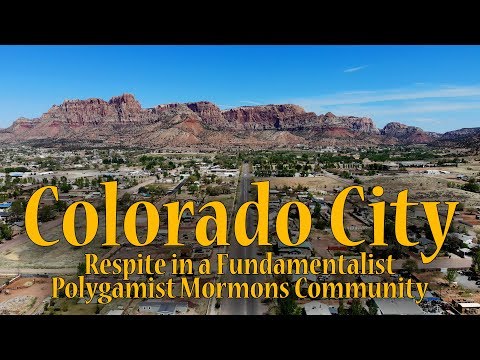 For more infomation >> S01.E05 - Colorado City, Respite in a Fundamentalist Polygamist Mormons Community / Bike touring - Duration: 21:46.

No comments:
Post a Comment