Hi, hello, welcome to "counseling & words" and to my word of today which is the Te
Reo Maori word "turangawaewae".
You might know that I live in Wellington, New Zealand
and that's why I want to introduce "turangawaewae" to you. "Turangawaewae" is one of the
most well known and powerful Maori concepts; literally "turanga' means
standing place and "waewae" means feet. So "turangawaewae" is often translated as
a place to stand. "Turangawaewae" are places where you feel especially
empowered and connected; they are your foundation, your place in the world.
They are your home. Well I am a native German speaker, and in German exists the
word "Heimat"; and by looking up both words Heimat and "turangawaewae" I realised
that both words have the same meaning. Heimat comes from the old high German word
himoti and the old Dutch word heimitha and "Heimat"- just like "turangawaewae"-
refers to a place towards which one has a strong feeling of belonging, and
usually a deep-rooted fondness. It's not necessarily the place where you were
born but it is the place where you feel a strong connection and belonging. Did
you know that nearly 60,000 new immigrants come to New Zealand every
year for a variety of reasons? What they have in common is that they come to live
and stay - at least for a while. They are looking for a new home, they are
looking for "turangawaewae" or a new "Heimat". I came here in 2008; but the first
immigrants came here around a thousand years ago. Kupe and his tribe were the
first Polynesian people who set foot on this country; and legend says that his
wife Kuramarotini devised the name Aotearoa,
meaning "long white cloud" on seeing the North Island for the first time. The
Maori name for New Zealand is Aotearoa, "land of the long white cloud".
Kupe and his people and all the generations after him found a "Heimat",
they found "turangawaewae" in Aotearoa. And now come with me to the Wellington
waterfront on this sunny Winter day. Kuramarotini she was the one who gave New
Zealand its name. Aotearoa "land of the long white cloud".
Almost a thousand years ago Kupe and his tribe set foot on this country to
find "turangawaewae", a "Heimat", a place to stand.
In our world today many people are on the go. They move, they are forced to move,
they flee their home countries for whatever reason. All these people live in
countries or in places they were not born in. They have to get to know and
learn other languages, cultures and rules. They don't have a safe place to stand.
"Turangawaewae" is not experienced yet and their "Heimat" is gone. "Turangawaewae", a
place to stand. But what does that mean? Having that place will make you feel
secure, accepted, acknowledged and loved. You can speak freely and give your
opinions openly, because it is allowed, and because you mean something to the
people around you. You can stand upright by yourself, proudly and listened to. Your
voice can be heard. You are part of that country, you are a valued member of a
group. The well-known feelings of foreignness will be gone, when you've found
"Heimat" and "turangawaewae". This won't happen overnight, or in days weeks or
even months. No, it can take years until you feel accepted. Feelings of not
belonging will still show up every now and then, but that doesn't really matter,
because you know that you have found "turangawaewae" and that will help you
to get through these recurring culture shocks. Yeah, that was about my Maori word
"turangawaewae", a place to stand. I hope you enjoyed the talk, thank you so
much for watching! But before I finish my talk, I want to
introduce a book to you. It's the book, I have it here, it's the book "So you are
free - making it home", and well I wrote the book
a few years ago. It's published in two languages in English and in German. The
German title is "So you're free - zuhause ankommen", and well in this book I try to
find out how or if people can find their place in life; and I also conducted
interviews with 12 immigrants from different cultures and backgrounds. I
will link everything in the description below. Thanks a lot, see you very soon
with a new word. Enjoy life and everything! Bye bye!
 For more infomation >> Mercedes-Benz S-Klasse S 350 L Automaat | Rijassistentpakket | Parkeerpakket | - Duration: 1:00.
  For more infomation >> 22/07/2017 6:41 p.m. (Black Lion Villa, 11 S Black Lion Ln, London W6 9TJ, UK) - Duration: 2:59.
  For more infomation >> Audi TT Roadster 2.0 TFSI PRO LINE, 200 PK, S-LINE PAKKET, 6-BAK, LEDER INTERIEUR, AIRCO, CRUISE CON - Duration: 1:00.
  For more infomation >> Audi Q2 Sport Pro Line S 1.4 150 pk - Duration: 0:43.
  For more infomation >> Craig Robinson & Adam Scott Partake In A Game Of Laser Tag At Comic-Con 2017 | GHOSTED - Duration: 0:57.

 For more infomation >> Stitches-MSP Version ♥ - Duration: 2:36.
  For more infomation >> Volkswagen up! 1.0 easy up! BlueMotion - Duration: 0:54.
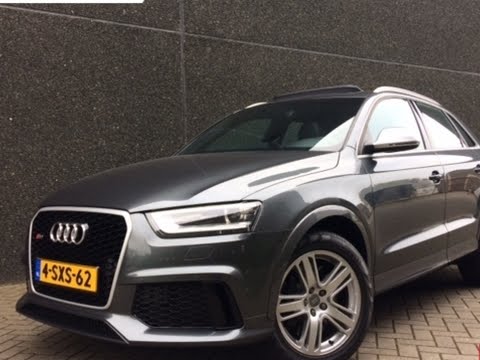 For more infomation >> Audi RS Q3 2.5 TFSI 310PK QUATTRO S-TRONIC PANO-DAK - Duration: 0:58.
  For more infomation >> Audi A3 Sportback 1.2 S-TRONIC AUTOMAAT AIRCO NAVI - Duration: 0:59.
  For more infomation >> Amici, Mike Bird cambia nome: ora è il cantante Cinemaboy - Duration: 3:27.
  For more infomation >> Ambra Angiolini e Massimiliano Allegri news: la scelta della coppia - Duration: 3:20.

No comments:
Post a Comment