Here in South Orangetown, we have a K through 12 robotics program. We strive to
provide opportunities for all of our students. Right now, these first-graders
are working on autonomously programming their Dash robots to navigate through a maze.
I like how the robots move by theirselves when you program it.
It gives them the basic skills and the entry points into learning more
complex programming and engineering skills later on down the road.
One of biggest things is problem-solving. They have to figure out how to build their robot, and then, program their robot.
I like engineering and building stuff.
We have these iPads and then we have these Spheros, and we connect them. And then we
can make a project. And then we can program them on the iPad.
This is the essence of 21st century learning. This is what we need to prepare kids to be able
to do for the 21st century, for the world that they're going to be working in.
Students have the opportunity to work on robotics projects in Challenge Lab, but
we also push out to other classes. So, we've collaborated with ENL teachers,
we've collaborated with the COVE program. But beyond just the technical skills,
it creates community and it offers the opportunity for students to work on
communication skills and collaboration.
Right now, we're working on a hexacopter, which is a kind of drone.
And, so it's just amazing learning how to use, like, all these different tools.
It's cool to see how the whole thing goes together.
They're very enthusiastic about it. They love coming in here and designing.
They just love experimenting: changing colors, changing speeds, changing directions. They're really getting it.
It's terrific because it's a hands-on, really fun,
creative challenge. They get to meet children from other schools and then
there's the competitive element, which is always fun.
Apparently, people subconsciously use much more water than they're supposed to. I came up with, um, an
app that you can use to, basically, calculate how much water you're using
and cut back on it .
The Project Lead the Way program is a sequence of courses that students can take while they're at
the high school. We currently have five college courses, and each course builds
off of the next course. And the courses range from, um, your Introduction to Engineering,
which is basically our CAD program/3D printing, all the way up to Aerospace Engineering and Digital Electronics.
I want to be an engineer when I grow up so, it's what I want to do.
When the light is on, when it hits the photo transistors, it revolves as, like, what the sunlight is doing
doing when it revolves around the Earth.
So here at the high school, we have a rookie FIRST robotics team. It's our start-up year, first time doing it.
A couple of kids came and asked if we could start a program here, um, and I thought it would be
a great idea because students in all classes are always looking for
opportunities to apply what they've learned.
We're the robotics programming team and we're working on writing all the code for the robot.
So robotics, AI, all of the skills that the kids are learning, are the skills that employers are going to want.
I think it's really important that they can practice and pull all of this together.
It's like a great opportunity, like, to get new skills.
I'm integrating skills that I've learned in engineering and computer science courses,
but, like, everything from math and science, of course, is used.
The experience that I've had working with the robot and programming the robot has got me a lot
more interested in pursuing computer science as a career. And the experience
that I've been getting I think will be really useful in the future.
It's a more hands-on club. We meet every day, as opposed to maybe once a week.
We're working hard and everyone has a unified goal,
even though we're spread out amongst a variety of tasks.
I'm the website admin. I design, I update the website and I'm also part of the marketing team.
Well, the FIRST program, that we're competing in, they have scholarships. And, well, I thought that was cool, too.
Um, but like, after so many meetings, after so many, like, after schools, this became more to me than just,
you know, like, a club that would look good on a college resume.
The challenging part is, is like, to pull all the pieces together.
If you have prior knowledge of knowing how to put stuff together, or whether you're an expert at it,
it doesn't really matter. It's just, you go in, you have fun and you just build a robot.
It teaches you all about mechanical things, electrical engineering and all
those types of things that'll be pretty useful in the future.
Really anyone can do anything for the robotics team to help.
And this certainly gives the students practical experience on how to do things,
how to function in a team environment, which is important going to college.
I want to go into electrical engineering, so obviously robotics and electrical engineering are very similar.
But I think more valuable than that is the management skills that I've been
taking on. I've taken on the role of the CEO of this whole team, which means I'm
managing the entire project. So I have to be able to understand what's going on in
each individual section of the team and be able to tie those together and make
sure we have good communications throughout.
Each of these students have unique learning characteristics and interests. And each of these
students brings something different to the table, with regard to integrating what's important to them.
I think once you teach kids the skill to take something very complex, break it down into little pieces,
and then organize it appropriately, it makes things much more digestible.
And they can apply that really almost to anything.
Winston Churchill defines success as the ability to move from one failure to the next with no loss of enthusiasm.
And that's really the essence of the of the engineering process, and that's what
we're trying to teach.


 For more infomation >> {Nightcore} Narcissitic Cannibal AMV + Lyrics - Duration: 2:48.
  For more infomation >> Sherlock Gnomes Trailer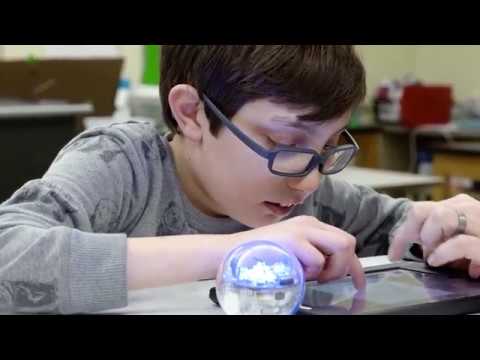

 For more infomation >> The Five 3/8/18 | The Five March 8, 2018 - Duration: 40:27.


 For more infomation >> LAKE TAHOE || usa with bae + bae - Duration: 2:44.
  For more infomation >> Tempesta d'amore, trame 12-18 marzo: William commette una pazzia, ecco quale - Duration: 4:16.
  For more infomation >> Hotel Buenavista, Adults Only in Denia, Spain (Europe). The best of Hotel Buenavista in Denia - Duration: 4:42.

No comments:
Post a Comment