In the 19th and 20th Centuries, the Industrial Revolution was changing how people interacted
with nature.
Pollution was being added to our environment even as resources were being removed from
it at a faster rate than ever before.
More children were enrolled in formal schools, rather than learning from their families and
communities.
And many more people were moving to cities and centers of industry, distancing themselves
from the natural environments they'd experienced on family farms and in small villages.
In answer to all of this, a passionate group of naturalists and educators formed the Nature
Study movement.
The foremost organizers of the nature study movement were Anna Botsford Comstock, Liberty
Hyde Bailey, Louis Agassiz, and Wilbur S. Jackman.
If you'd like to learn more about Anna Botsford Comstock, you can click on over to this video
on Step Back History, my friend Tristan's channel, where I talk about her life and other
projects.
The Nature Study movement emphasized a new way of thinking about environmental education,
focusing on personal exploration and observations made of natural phenomena while outside, rather
than expecting students to develop their understanding through books and conventional education methods.
Many of the organizers recognized the basic concepts of biophilia and how time spent in
direct interaction with nature can provide a host of benefits to both students and teachers.
Anna Botsford Comstock wrote the Handbook of Nature Study, which served as a guidebook
for teachers interested in exploring the potential of the Nature Study movement for their classrooms
and students, and it's still in publication today.
There's a link in the video description to a PDF version of the Handbook, if you'd like to
take a read through or use it in your own classroom.
I think it's a really interesting read, but I'll leave it up to you to make your own opinions
about its usefulness in modern education.
I will warn you that some of the language in the Handbook is a little archaic.
For instance, Comstock refers to the teacher as "she" throughout the entire book, even
though there are plenty of male teachers, and she refers to the student or child as
"he" the entire time.
The Handbook of Nature Study opens with a brief explanation of the movement and its
benefits for students and teachers.
Comstock emphasizes that Nature Study is all about observations, explaining that
making and connecting observations fosters understanding of natural processes for children.
The Handbook also supports Nature Study as a means to the benefits of biophilia, and
its assertions still feel relevant today.
In the opening section, Comstock writes: "This is an age of nerve tension, and the relaxation
which comes from the comforting companionship [of] woods and fields is, without a doubt,
the best remedy for this condition."
One thing that I found especially surprising and encouraging about the Handbook of Nature
Study is that it advocates for teachers to be honest with their students when they don't
know the answer to a question.
We hear this all the time in education: it's better to say "I don't know" than to
make up an answer.
Since Nature Study is rooted in observational science, Comstock recommends teachers say
something to the effect of: "I don't know, but I bet if we look more closely, we might
discover the answer!"
There are a few parts of the Handbook I don't necessarily agree with.
For example, Comstock asserted that nature study lessons should never be repeated, since
students can get tired and bored of hearing about the same things.
While this may be true to an extent, I think it's important to revisit certain concepts
as students grow and mature so they can be explored in greater breadth and depth.
I also find the statement "A microscope has no legitimate part in nature study"
highly suspect.
I've used a microscope with great success with groups of children excited to
observe the movement of pond plankton that would not have otherwise been visible.
Denying the usefulness of technology was perhaps a downfall of the Nature Study Movement.
There's also a section in the intro that makes Comstock sound especially prescient.
She writes: "Much of the naughtiness in school is a result of the child's lack in
[their] work, augmented by the physical inaction that results from an attempt to sit quietly."
Almost a century later, Richard Louv would write about this same problem being cured by time
spent in nature in his book, Last Child in the Woods.
But, that's a video for another day.
The Nature Study movement was absolutely about scientific education, but not in the same
formal manner as most biology curricula.
Instead of gathering information from books and lists and then memorizing important
facts, students were encouraged to make observations of whatever living things were convenient
for the season and location where they lived.
For instance, the Handbook encourages using chickens and robins for making observations
about birds, rather than talking about parrots and ibis in faraway exotic locations.
Personal observations are usually easier to remember than facts read in a book, so the
movement hoped that students would build their own scientific foundations and understanding
of complex natural relationships in a more meaningful and permanent way.
Most of the book deals with groups of living things, such as birds or plants or insects.
Each section is broken down into simple lessons that start with a question that will encourage
students to make observations.
Example individual species are given their own pages within each broad group section,
with their own corresponding lessons.
For instance, in the Birds section, there are subsections on Chickadees, Bluebirds,
Robins, Screech Owls, Kingfishers, and many more.
There's SO much more good stuff I could talk about with The Handbook of Nature Study,
but I really recommend you take a read through yourself, even if you're not a classroom
teacher.
And don't forget that you can click over to Step Back History if you'd like to learn
more about the Handbook's author, Anna Botsford Comstock.
If you'd like to see more from Tristan and me, you should also check out Dungeon Dwellers
on Twitch for some nerdy-fun-times.
Starting this Monday, March 12, I'll be playing Dungeons and Dragons with Tristan
every other week on that channel.
If you liked this video, don't forget to like it!
If you didn't like this video, please share it with someone who would.
And if you'd like to support The Roving Naturalist, remember to hit the subscribe
button and the bell notification icon.
You can also follow me on Twitter, Facebook, and Instagram, and read more science posts on my
blog.
Thanks for watching, and I'll see you next time.
 For more infomation >> Dragon Ball Super 130 -131 freezer wins the power tournament-Goku dismisses - Duration: 11:10.
  For more infomation >> LEGO® Ninjago® High Spee...
 For more infomation >> Audi A5 Cabriolet 1.8 TFSI S LINE - Duration: 1:03.
  For more infomation >> Audi A3 Sportback 1.2 TFSI S Edition Navigatie, Xenon, Cruise Control, 17"LM - Duration: 0:58.
  For more infomation >> Opel Combo GB 1.3 CDTi 95pk L1H1 S/S DPF Sport - Duration: 1:01.
  For more infomation >> Suzuki S-Cross 1.6 Exclusive (Navi,Clima,Cruise,PDC) - Duration: 0:58.
  For more infomation >> Audi A3 Cabriolet 1.4 TFSI 140PK Ambition Pro Line S Leder, Xenon, Navigatie, Cruise Control, 18"LM - Duration: 0:59.
  For more infomation >> Audi A3 Limousine 1.4 TFSI 150PK Sport Pro Line S Pan.dak, Xenon, Navigatie, Cruise Control, PDC, 18 - Duration: 0:56.
  For more infomation >> Audi A6 Avant 3.0 TDI quattro Pro Line S Navigatie, Cruise Control, Parkassist+Cam, 19"LM - Duration: 0:59.
 For more infomation >> Comment réussir la stratégie Marketing Digital de sa PME? - Duration: 3:23.
  For more infomation >> Zebulon Dudora - Full Ceutanázia (felirattal) - Duration: 5:04.
  For more infomation >> 她被封「全球最正氣象主播」!S曲線讓人無法專心看新聞「但私底下尺度才大到讓人抓狂」! | hk Miner Jin - Duration: 2:20.
  For more infomation >> Alexine Tinne 2/2 - O'Hanlon Heroes (Season 2) - Duration: 50:11.

 For more infomation >> LAK'AUTO - Duration: 3:37.

 For more infomation >> Cette mère demande un signe près de la tombe de son enfant de 4 ans - Duration: 5:10.
 For more infomation >> Deux ados sauvent une fillette de 5 ans d'un kidnappeur grâce à 3 mots simples - Santé 365 - Duration: 6:59.
  For more infomation >> Mercedes-Benz E-Klasse 200 D Business Solution AMG automaat Widescreen cockpit - Duration: 0:59.
  For more infomation >> Volvo V50 2.0D Momentum APK tot 21/01/2019 - Duration: 0:59.
  For more infomation >> Tariq Ramadan sous le coup d'une troisième plainte pour « viols » - Duration: 2:31.
  For more infomation >> Toyota RAV4 2.2D EXECUTIVE BUSINESS 4WD NAVI-LEDER-AUTOMAAT! - Duration: 0:56.
  For more infomation >> Kate Middleton, enceinte, pourrait accoucher lors d'une date très symbolique - Duration: 2:38.
  For more infomation >> Mercedes-Benz Sprinter 513 CDI 130 pk Bakwagen met D'Hollandia laadklep, Dakspoiler, Airco, Cruise - Duration: 1:01.
  For more infomation >> BMW X3 2.0D AUT.*!*SPORTLEER/NAVI/TREKHAAK*!* - Duration: 0:54.
  For more infomation >> Cette recette va facilement dégager vos poumons en 3 jours - France 365 - Duration: 6:06.
  For more infomation >> Toi aussi tu peux investir comme un Millionnaire - Mastermind MMI - Duration: 5:04.
  For more infomation >> Une étude révèle que le jeûne pendant 72 heures peut régénérer l'ensemble du système immunitaire - Duration: 6:33.
  For more infomation >> Votre type de sous-vêtements révèle un secret sur votre personnalité | Santé 24.7 - Duration: 7:20.
  For more infomation >> Les déchirants adieux de l'Italie à Davide Astori - Duration: 2:18.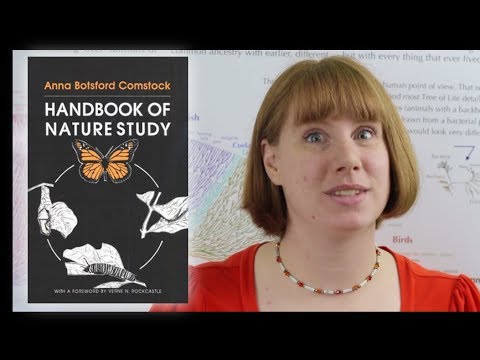
 For more infomation >> Barbara D'Urso lascia Mediaset, la vogliono sostituire? | Wind Zuiden - Duration: 4:00.
  For more infomation >> Comment gagner de beaux chantiers avec mon site web ? - Duration: 2:58.
  For more infomation >> La Villa 3 : Beverly en guerre avec Nathalie, l'ex de Vivian ? Elle pousse un coup de gueule - Duration: 3:47.


No comments:
Post a Comment