[drum line cadence]
Hello, everybody.
James Christian again.
I am here with video number two in this short series
on how to play tenor drums.
In the last video, we focused on basic around patterns,
and we focused on our playing zones
and our method of movement,
which is breaking from the elbow, not from the wrist.
In this video, we're going to start applying around patterns
to some basic rudiments.
With everything, as I said last time, you should focus on playing
snare drum or at least on one drum pretty close to equal time.
As you're focusing on moving it around,
focus on your up-and-down Y-axis sound quality.
So I'm going to start on one drum, and we're just going to cover
the basic rudiments we're going to go over in this video.
The first rudiment is the single stroke.
I'm not going to go super fast like a single stroke roll.
We're just going to treat it as moderate tempo 16th notes.
So practice on just getting each hand even.
Make sure they're the same heights and that you have
a smooth sound between the two.
So here you go.
Just play some straight 16th notes.
[demonstration]
The next rudiment is doubles.
We're not going to go super fast like a double stroke roll.
But just focus on two notes on each hand with a full sound.
Here you go:
[demonstration]
We'll go a little faster in a second.
Before we do, I want to point out that
you don't want the second note to drop.
A lot of players--beginning and more experienced--
tend to drop the second note of their doubles.
You want them both to be full sounds.
Think of it as the difference between posture,
like someone who's hunched over.
So they're just kind of throwing the double at the drum--
[weak doubles demonstration]
Versus someone who stands up straight, and projects themselves,
and gives full sound when they're speaking.
It's the same idea here with the doubles.
Give both notes equal volume and full sound.
[confident demonstration]
So here you go. Let's play them a little bit quicker
and focus on full sounds for both notes.
[demonstration]
The next pattern we're going to play is basically
the same as before-- the singles that we did.
We're going to do singles again, but now
we're going to do them in triplet form.
And you need to be able to do them
with accents and without accents.
So we'll start without accents.
Here you go.
Here's basic triplets:
[demonstration]
Now try it with accents.
I'm going to start them slowly.
[demonstration]
When you're working on triplets, I would recommend
making big motions.
Make your accents big and your non-accents--
sometimes called your tap heights or your inner beats--
keep those low and closer to the drum.
Get a good contrast between the two.
As a beginning player, I would say if you can
get up to about 120 beats per minute on the metronome,
that's a pretty good starting point.
So if you're not quite there yet, that's a good goal to work on.
So it should be about there. [snapping tempo]
[demonstration]
So work on getting your triplets up to about that speed,
and you'll be in pretty good shape.
That'll be a good starting point.
The final pattern we're going to look at--the rudiment--
is paradiddles.
And again, you need to be able those
with and without accents.
So here you go.
First one-- straight paradiddles, no accents.
[demonstration]
Notice again, on the double part of the paradiddle--the diddle part--
I'm not dropping the second note.
Try to keep them as even as you can.
Now add in the accents.
[demonstration]
Once again, I'm making really big motions.
I'm making the accents strong and the non-accents softer,
making a big distinction.
Now when you're first getting comfortable with these,
it's important to train your body to feel the motion.
As you get more confident with it, you can reduce the stick heights,
and you can play softer, and get just better control
at softer dynamic levels.
So ultimately, this is what you want to be able to do:
[demonstration of dynamic levels]
So you still want to have that accent definition
at the softer volumes, and be able to take it bigger and softer,
and just have control over the full range.
But when you're first developing that, start big.
It's okay.
I know a lot of times, you're probably told,
"Percussion is too loud," or things like that.
But when you're practicing on your own to develop
that muscle control and just to feel it in your body, go big.
Make it bigger, and then just start
to learn to control it at softer levels as well.
All right, that should do it for our initial framework on one drum.
Now we're going to start moving it around the drums.
So we're going to start with singles,
and we're just going to go straight down the drums:
1234, 1234.
I'll start it slowly.
I'm going to start it more about 8th notes at that tempo,
and then we'll do it a little quicker, about 16th notes or so.
[slow demonstration]
Faster:
[faster demonstration]
Once again, do not break at the wrist.
Do not do this:
[sloppy demonstration]
That is SLOPPY, and it will get you nowhere.
It will always make you sound bad.
And once you start adding in flams and rolls and all that,
you won't be able to control them.
So don't get in that bad habit now.
Break at the elbow, and move down the drums that way.
All right, let's do the same thing coming up the drums now.
So we're doing to start with the left hand,
and we're going to go: 4321
[slow demonstration]
[faster demonstration]
For our final singles around pattern,
we're going to incorporate the spock drum.
So you're going to go straight down and then back up.
So you're going down and up in the same exercise,
and you're going to start on the left hand.
Here you go:
[slow demonstration]
Same thing a little quicker:
[faster demonstration]
Now we're going to do the same thing with doubles.
We're doing to go down the drums: 1234.
Here you go:
[slow demonstration]
A little bit quicker:
[faster demonstration]
Now we're coming up the drums with doubles.
[slow demonstration]
Now faster:
[faster demonstration]
Finally, we're going to incorporate the spock drum--
once again going down and then back up,
starting on the left hand.
[slow demonstration]
And faster:
[faster demonstration]
On all of these double stroke exercises,
if you feel comfortable taking them faster
and playing them as a double stroke roll,
then by all means do that, and you'll get ahead even further.
This is what those would sound like:
[demonstrations]
The next pattern we're looking at is triplets.
Before we do that, I want to go back to 16th note based singles.
And we're going to use drum #1 as our "hub," our central point,
and we're going to move out to drum #3 on every downbeat.
Uh, no accents.
So here you go:
[slow demonstration]
Now do it with accents:
[slow demonstration]
Notice the difference between the two.
A lot of tenor drummers get sloppy on accents
when they're moving to another drum.
They basically let the pitch change create the effect of an accent.
But there is a difference.
So when there's no accent, don't add an accent.
When there is an accent, bring it out; make it strong.
Now we're going to do the same thing on the left side.
We're going to keep drum #2 as our central hub,
and you're going to move out to drum #4 on the downbeats.
So first time, no accents:
[slow demonstration]
Now with accents:
[slow demonstration]
Let's do both a little bit quicker.
Right side first:
[faster demonstration]
Now with accents:
[faster demonstration]
Now the left side:
[faster demonstration]
And with accents:
[faster demonstration]
All right, the reason we did that was to set you up for triplets.
So now we're going to alternate them.
Before, we did just right hand or just left hand.
Now we're going to go back and forth
between the right hand and left hand.
So we're going to start with drum #1 as your central hub.
And on every downbeat, you're going to move the right hand
on beats 1 and 3 out to drum #3--
and then the left hand on beats 2 and 4
out to drum #2.
So here you go, no accents:
[slow demonstration]
Now add the accents in:
[slow demonstration]
So work that until you get comfortable with it.
And again, being able to make the difference
between accents and non-accents, that will help you a lot.
Now we're going to take the same idea we did before
with the around patterns, and we're going to do the triplets
moving from drum to drum.
We start on drum #1.
It's going to be right-left-right.
When you move to drum #2, it will be left-right-left.
So the hands are going to be alternating,
which one you start on each downbeat.
So here you go.
Let's go down the drums.
We're going to go: 1234.
[slow demonstration]
Now add accents:
[slow demonstration]
All right, let's do it a little bit quicker on both.
No accents first:
[faster demonstration]
Now with accents:
[faster demonstration]
Now we're going to go up the drums: 4321.
I'm not going to do every one with and without accents
on these next few patterns.
But I would recommend pausing the video and doing it both ways.
So I'm just going to do it without accents here.
So starting on drum #4 going up:
[slow demonstration]
Now a little bit quicker:
[faster demonstration]
Finally, we're going to do down and up using the spock drum.
So start on the left hand:
[slow demonstration]
And a little bit quicker:
[faster demonstration]
All right, our final pattern is the single paradiddle.
Last time, with the triplets, we used drum #1 as our hub.
This time, we're going to use drum #2 as our hub.
So keep all the notes here, except for--
on the first note of each paradiddle,
you're going to move out to drums #1 and #4.
So here you go, no accents first:
[slow demonstration]
Now try it with accents:
[slow demonstration]
Now let's do both a little bit quicker:
[faster demonstrations]
So now, as you can probably guess,
we're going to go straight down the drums.
So paradiddles straight down: 1234.
[slow demonstration]
Now add accents:
[slow demonstration]
Now do both a little bit quicker:
[faster demonstration]
Now add accents:
[faster demonstration]
Once again, I'm not going to do everything with all the accents,
but I would recommend pausing and doing both ways.
This time, I'm going to do it with accents on everything.
So you might practice it without accents on these.
So I'm going to go--starting on the bottom drum, drum #4, going up:
[slow demonstration]
A little bit quicker:
[faster demonstration]
For our final exercise, we are going to start on the spock drum--
go down and back up.
I'm going to do it with accents again.
You may want to pause it and try it without.
[slow demonstration]
A little faster:
[faster demonstration]
You'll notice on some of these exercises,
I repeated them just twice; sometimes I did it four times.
I would practice-- for first learning these--
I would try to do 4 to 8 times at least on all of them.
But just however much you need.
If you've got it the first time through and it's no big deal, then move on.
If you need some extra practice, do it 20 times or 50 times--
whatever you need to do to get it better.
All right, you can take these same patterns--
and I would recommend starting to take things you normally
play on snare drum and move them around the drums.
So you could take just basic 16th note patterns like:
[1 &a 2 3 &a 4 ]
Things like that.
You could do patterns straight down the drums:
[1e a 2 3e a 4 ]
Any pattern you know--just start doing those general around patterns,
and you'll get pretty comfortable with them.
You can also do this with and rudiment you know.
Do it with double paradiddles, triple paradiddles,
paradiddlediddles, and any other rudiments you know--
with flam taps or anything else like that.
Well, I hope this is helpful.
In the next video, we're going to start building our speed.
So now you've got basic playing zones;
you've got general movement control;
and you have your basic rudiments and around patterns.
So join us next time, and it will be a lot of fun.
If this is helpful, please "like" the video.
And if you have any thoughts on how to apply these--
or you make some videos of your own
doing some of these exercises-- feel free to post links to them
down below and add comments.
And if you know anybody who could benefit from this,
please share it and pass along the word.
Thanks for watching, and I will see you next time!
[drum line cadence]
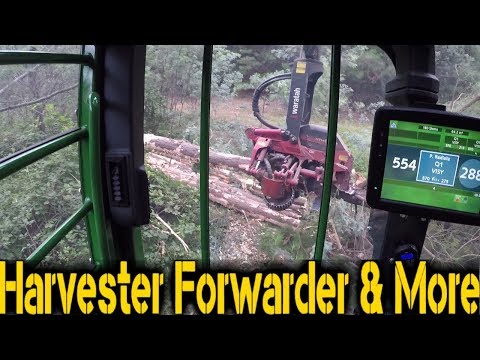 For more infomation >> John Deere 859MH & Waratah HTH622B | Operator Headcam | OnBoard - Duration: 16:45.
  For more infomation >> 黃子佼當年驚爆「劈腿曾寶儀」狠甩小S,如今45歲的他向小19歲女友求婚,沒想到結果讓人無法接受! | CCTV 365 - Duration: 4:48.
  For more infomation >> En qué consiste la Blefaroplastia | Dr. Miguel Hoyos | LeClinic´s - Duration: 1:05.
  For more infomation >> CodingSchule - Getting with the programme - Duration: 3:25.
  For more infomation >> Rovira levanta el veto a Jordi Sánchez y lo deja todo en manos de la CUP - Duration: 2:51.
 For more infomation >> Sa mère et sa grand-mère postent une photo étrange qui suscite l'incompréhension des internautes - Duration: 3:29.
 For more infomation >> Teddy Riner, tout de cuir vêtu, et sa belle Luthna Plocus pour Léonard - Duration: 7:58.
  For more infomation >> Hexen unter Tatverdacht | Zur Sache Baden-Württemberg! - Duration: 5:07.
  For more infomation >> 14年前SHE三位成員設想單飛及過氣後的生活,現在聽起來讓人唏噓 | CCTV 365 - Duration: 3:37.
  For more infomation >> ANITA MOORJANI PARIS LA CIGALE 2016 - Duration: 2:21.
  For more infomation >> SolarInstall 8th: Tanya Soji feedback video - Duration: 0:34.
  For more infomation >> Girls Like Me - Maria Ellis
 For more infomation >> Mirga Gražinytė Tyla - Claude Debussy - Prélude à l'Après midi d'un faune - Duration: 5:30.
  For more infomation >> 'The Shape Of Water' Fish Man's Wild Oscars Night - Duration: 0:50.
  For more infomation >> [응콩Vlog] 틈틈히 찍은 브이로그 - Duration: 8:01.
 For more infomation >> Cherchemonnid.com: Témoignages de professionnels de l'immobilier - Duration: 2:36.
 For more infomation >> 레보식] 써마이트로 난입해서 능력도 안쓰고 MVP 먹는영상 - Duration: 15:55.

No comments:
Post a Comment