The river Our has its source in the Belgium Ardennes
and marks the boarder to Germany in the North of Luxembourg.
The river has a total length of 78 km,
and drains into the Sauer near Wallendorf.
Along the banks, many plants and animals can be discovered,
but deep under the water, between the gravel,
lives an animal that's not commonly known.
It is up to 10 cm long
and moves along the ground on one foot.
Hello, have you ever met a thick shelled river mussel ?
My name is Unio, and I'd like to invite you
to join me in my underwater world.
My great- great- great-, and many more great-grandparents
already lived here in the Our and in other rivers
and purified the water.
As a matter of fact, we exist since the age of the dinosaurs.
During spring I was released as a little larvae by my mother,
as a little larvae by my mother,
together with my brothers and sisters, into the water.
To develop, we river mussels
need a host fish.
That means we need a fish
onto who's gills we can attach.
By breathing in the water
the fish also inhales the tiny larvae,
and that's how I got hold onto the gills of a minnow.
That's where I developed from a larvae
to a small mussel.
After a few weeks,
when I've grown big enough
I let go of the fish, and let myself drop onto the stony riverbed.
Here, I use my foot to quickly burrow into the gravel,
where I can safely grow up to full size.
Only a few months later I'm ready
to pursue my favored pass time :
filtering the river water.
After 5 to 6 years
I'll release
my own larvae,
Do you want to know why I'm filtering water,
and how I do it?
Of course I do this to feed myself!
The mussel takes up water through its gills
and filters it for tiny particles.
These consist of single-celled organisms or small algae,
or tiny fragments of dead plants and animals.
The mussel rejects the filtered water back into the river.
Anything that it can't digest or use
is simply deposited into the gravel.
Many other animals profit
from this additional food source.
The mussel repeats this procedure 24/7
and can filter up to 50 liters a day.
Remarkably, during the procedure two things happen at the same time:
the mussel and many other creatures find enough food,
and additionally the river water remains clear.
This experiment shows my friends in action.
They work just as a modern filter
and this without any costs or materials,
since they don't need electric energy.
They grow in nature,
no need for factories.
Each mussel filters up to 2 liters of water every hour.
Thus, just a few mussels can filter
muddy water much faster
than a common aquarium pump.
But what about bigger quantities of water?
The water reservoir in Esch-Sauer
can hold up to 60 million m3 of water
and is important to provide the whole country with drinking water.
But first the water
needs to be filtered and treated
in order to be usable to humans.
A huge filtration plant is in charge of water purification.
It consumes a lot of time and energy,
since every one of us is using about 125 liters of water every day!
Theoretically the mussels could be very helpful in this process.
2 to 3 healthy mussels could
purify the water one person uses each day.
To supply the whole country,
at least 1.5 million mussels
would be needed.
How is it going? Fit?
Yes Unio, everything's running smoothly.
Nice of you to come and visit.
It's a hard job, no breaks…
There's always work to do!
Analyzing, filtering, pumping,
nonstop.
Why do I have to do all the work
when you and your family and friends are fit
and could help me filter the water?
We would love to give you a hand,
but unfortunately there are not many of us left
in the rivers and streams of Luxembourg.
Oh really, I didn't know that.
Why are there only so few mussels left?
Could you show me?
I never get out of here.
All sorts of hazards and dangers
have been giving us
a hard time to survive lately.
In pipelines that discharge into the river you'll find many things
that don't belong into the water.
Medication, chemicals, food left over's,
plastic, waste water, fertilizers,
and all sorts of rubbish
find their way into the water and are harmful for the whole ecosystem!
Just take a look at this mess!
Way too often untreated sewage still
discharges into the streams.
How are we supposed to live in this filth?
Our host fish no longer
have access to many sites
because of badly build pipes
instead of proper bridges.
Another problem is soil erosion.
When cattle drink from the stream,
they trample on the bank and mud enters the stream.
Spruce plantations contribute to muddy water as well.
Their roots can't get a good grip in the wet river banks,
so they can't hold back the soil.
Increased amounts of mud clog the riverbed.
When there is too much mud in between the gravel,
water can't run through it any more.
The small mussels that burrow into the gravel
can no longer get sufficient freshwater and oxygen.
So how can we help the thick shelled river mussel?
Huge amounts of gravel are deposited onto the river banks
every year, using heavy engines.
The river distributes the gravel
on hundreds of meters along the riverbed,
primarily during flooding events.
The river builds up a new layer
of clean gravel without mud.
The habitat of mussels and many other animals
is thus recreated.
The main host fish of the thick shelled river mussel,
the European minnow profits from this action as well.
The minnows deposit their eggs, similar to the trout
in high oxygenated spots in the riverbed.
In clean gravel,
the eggs, as well as the newly hatched larvae
have a good oxygen supply, and higher chances to survive.
The water quality is checked regularly.
On several springs and tributaries, the oxygen level,
conductivity and temperature
are checked weekly.
The same samples are taken to a chemical lab,
where further important parameters such as
the pH and nutrition level are checked.
A special rearing station has been installed
next to the river Our to breed young mussels.
Here the thick shelled river mussel
can grow up in a safe environment.
A regular control checks whether
the young mussels are healthy and grow well.
To help the mussels grow, they are fed twice daily,
using a special algae diet.
The algal mix is adapted to number and size of mussels
and thoroughly measured for each tank.
After 2 to 3 years on the rearing station
the small mussels are released into the river
to support their friends in the Our.
Mussels keep our rivers clean,
and play an important role in our ecosystem.
If we keep up protecting them, there is a chance
that more mussels will survive in our rivers in the future.
But to reach this goal, we have to take care
of the water and habitat quality, not only in Luxembourg,
but also across the borders.
That's why the collaboration and exchange
with foreign countries is so important !
All over Europe and the whole world
scientists are busy to improve this situation
Let me say Bye, Ciao and Salut,
don't hesitate to visit me again !
Many thanks that you stand up for
a pure nature and a clean Our!
Summing up we can say
healthy mussels lead to clean rivers,
and if the rivers are clean, many animals,
including us humans are healthy and happy !
 For more infomation >> 柯P狂言語錄踩紅線?10大驚句登最常失言政治人物 - Duration: 4:31.
  For more infomation >> 如果你剛生了寶寶!你懂怎麼幫他買保險嗎? - Duration: 10:38.
  For more infomation >> Toyota Yaris 1.5 VVT-I Aspiration | Climate & Cruise Control | Safety Sense - Duration: 1:08.
  For more infomation >> 蔡徐坤与徐峥竟然撞衫了,看来时尚是不分年龄的啊? - Duration: 2:24.
  For more infomation >> SPIDERMAN vs CINDERELLA - BALL PIT FUN
 For more infomation >> Opel Astra Sports Tourer 1.3 CDTI S/S COSMO | NAVI | SPORTSTOELEN | LM VELGEN | TREKHAAK - Duration: 1:05.
  For more infomation >> Audi A1 2.0 TDI Pro Line S - Duration: 0:54.
  For more infomation >> [A day before us 2] EP.15 One Day Before Love _ ENG/JP - Duration: 3:56.

 For more infomation >> 谢娜自曝主动向张杰告白"我们要不要试试",张杰隔了一天才答应 - Duration: 17:31.
  For more infomation >> 有名なんだと思うけどちゃんと知らない~クラシック曲選 [鑑賞・作業用BGM] - Duration: 1:04:27.
  For more infomation >> 小S谢娜同台PK争"综艺一姐" 谢娜账单暴露真实个性 - Duration: 10:35.
 For more infomation >> 有种感情叫康永小S,有种默契叫何炅谢娜,跨性别友谊日久弥坚! - Duration: 13:43.
  For more infomation >> 汪小菲上厕所大S害怕丢下自己 撒娇称"我怕怕" - Duration: 0:39.
  For more infomation >> 大S节目中脆弱敏感 汪小菲:老婆失去三胎身体虚弱 - Duration: 1:20.

 For more infomation >> 大S活动无修图遭曝光,比老公还要沧桑十岁,化妆前后完全是两个人 - Duration: 1:20.
  For more infomation >> YAMASHIRO ONSEN BAJO LA LLUVIA (KAGA ONSEN) - Duration: 5:11.
  For more infomation >> Складное зеркало с расческой Печенька - купить складное зеркальце - Duration: 0:35.
  For more infomation >> David Beckham Cameo ¦ Kral Arthur Kılıç Efsanesi | HD - Duration: 3:15.
  For more infomation >> Suzuki Vitara Sport 1.4-140pk Boosterjet - Duration: 1:07.
 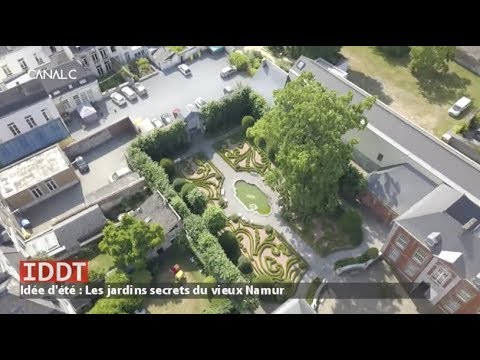 For more infomation >> Idée d'été : Les jardins secrets du vieux Namur - Duration: 5:36.
  For more infomation >> Jorge Rial a Morena: "Sos Silvia, sos D'Auro" - Duration: 1:53.
  For more infomation >> 5 secrets esthétiques et naturels pour atténuer les pattes d'oie - Duration: 8:22.
  For more infomation >> Kia cee'd Sporty Wagon 1.4 CVVT X-TRA | AIRCO | LMV - Duration: 1:10.
  For more infomation >> Volvo C30 2.0D SUMMUM / LEDER / AIRCO-ECC / CRUISE CONTR. / EL. PAKKET / XENON / LMV - Duration: 1:11.
  For more infomation >> Mercedes-Benz A-Klasse A 180 d Automaat Business Solution AMG | MBUX Navigatie | LED - Duration: 1:08.
 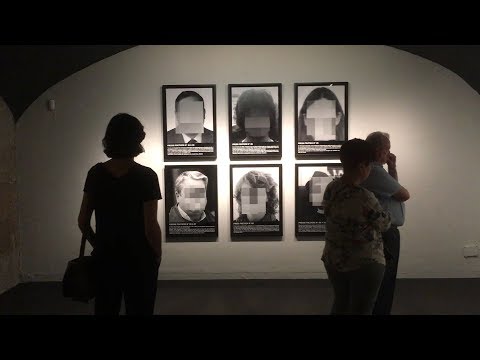 For more infomation >> What Became of the Freedom of Speech? | Soy Cámara V.O.S.E. - Duration: 19:38.
  For more infomation >> Charlène et Albert de Monaco- La principauté touchée par un scandale - Duration: 1:19.
  For more infomation >> CLIC ET SA BANDE - Les raisons de la chaleur - Duration: 12:16.
  For more infomation >> SAGWA, LA CHATTE SIAMOISE - Embobinée par un fil - Duration: 13:01.
  For more infomation >> UỐNG NƯỚC ĐÚNG CÁCH HỖ TRỢ ĐIỀU TRỊ HUYẾT ÁP CAO GIÀ TRẺ ĐỀU NÊN GHI NHỚ - Duration: 4:36.
 For more infomation >> La reine Elizabeth II accueille une fête de jardin écossais avec 8 000 invités - Duration: 2:31.
  For more infomation >> 昔日港姐冠軍當紅時退圈當白領,難以適應重新復出,44歲還無男友 - Duration: 9:31.
  For more infomation >> "réunion absolument incroyable" entre Rihanna et le couple Macron - Duration: 3:23.
  For more infomation >> Je te donne tout - Luc Dumont | Du nouveau dans l'air - Duration: 13:31.
  For more infomation >> Charlène et Albert de Monaco face à « une terrible épreuve » selon France Dimanche - Duration: 1:23.
  For more infomation >> Michel Drucker a reçu des sms cinglants après ses critiques sur Laurent Delahousse - Duration: 3:15.
  For more infomation >> NOUVEAU MODE WW2 COD GAMEPLAY PS4 FR ! - Duration: 6:46.
 For more infomation >> 타국이 두려워하는 화력덕후 국방부가 선택한 전투기 - Duration: 5:50.

No comments:
Post a Comment