hey, welcome to 12tone! it's often tempting to think that the notes we use are set in
stone: we divide the octave into twelve steps, each the same distance wide.
that's just how it works.
basically every piece of music we listen to follows that same system, so it makes sense
that we'd start to see it as an actual rule, but in reality it's just one of many possible
ways to map the tonal space, which is a fancy way of saying we can find different sets of
notes if we try, and one person who tried very successfully was a Mexican-American theorist
named Ervin Wilson.
Wilson was a long-time associate of Harry Partch, inventor of the Genesis Scale, a 43-note
monster of a scale designed to demonstrate Partch's ideas about tonality.
Wilson had a similar philosophy, but where Partch went big, Wilson's vision was smaller.
a lot smaller.
his most famous work is probably the Hexany, which is made up of only 6 notes, but it manages
to fit an absurd amount of variety and color in that fairly limited collection.
first, though, we have to talk about Partch and Wilson's goal: just intonation.
basically, this is the idea that the intervals between our notes should be mathematically
pure.
what does that mean?
well, when you hear a note, what you're really hearing is a sound wave with a specific frequency,
and when you hear multiple notes at once your ear effectively calculates the ratios between
those frequencies.
generally, intervals sound more consonant when they resemble simple, small number ratios,
like 2 to 1 for the octave or 3 to 2 for the perfect fifth, and advocates for just intonation
argue that we should tune our instruments to not just approximate those ratios but perfectly
reproduce them, creating completely consonant intervals.
at least, mathematically speaking.
the Hexany was part of Wilson's contribution to this effort.
it's the smallest interesting version of a group of models he developed called Combination
Product Sets, and while it's usually depicted on the corners of an octahedron, I find it
easier to visualize with a cube. plus, it's easier to draw.
anyway, to build a Hexany, we need to start with four seeds.
these can be any four odd numbers, but for this, we'll go with the simplest group, 1-3-5-7,
because I'm lazy and don't want to deal with big numbers.
oh, and because it creates the most consonance, which is kind of the point.
but mostly it's the laziness.
the next thing we need to do is multiply these numbers together in pairs.
so, like, 1 times 3 is 3, 1 times 5 is 5, 3 times 7 is 21, and so on, giving us six
new numbers which represent our actual notes.
we're still just dealing with ratios, though, so to convert them into real pitches we need
to pick a reference point, like this low A. it's not actually a part of our Hexany, it's
just gonna serve as the "1" that these are all based on.
then we multiply that note's frequency by each of our note values, giving us 3, 5, 7,
15, 21, and 35, discard the starting note and voila, we've made a Hexany. it's really
spread out, though: the highest and lowest notes are like three and a half octaves apart.
fortunately, this system doesn't care about octaves, so we can just multiply and divide
these by 2 until they're all right next to each other, giving us this: (bang)
from here, it starts to get a bit hard to follow along on a flat piece of paper like
this, so it's time to get 3D.
I'm gonna take this paper cube my brother made and try to put our notes on it.
but we can't just put them anywhere: there are rules to this.
if two sides are touching, we want those two notes to sound consonant together, which means
they need to share a factor from our seeds.
so if we make this face our 1 times 3 side, then we can't put 5 times 7 here.
it has to go on the opposite side, where it doesn't share any edges.
1 times 5 can go here, though, because it shares a 1 with this side and a 5 with this
one.
then we can fill in the rest, and we've got ourselves a 3-dimensional map of consonant
tonal space, which is kind of a mouthful so I'll just call it a Tonality Cube.
so what does it do?
well, each corner of the cube represents a triad made up of the three notes it's touching,
but unlike normal harmony, each of these triads is completely unique.
let's go back to the major scale for a second: (bang) it's got three different major triads,
here, here, and here, and if we ignore the note they start on, all three of them sound
exactly the same.
the ratios between their notes are identical.
in the Hexany, on the other hand, there are no such redundancies: it has its own version
of a major triad, found here (bang) but that's it.
no other triad on this cube has that same frequency ratio.
Wilson breaks the triads of the hexany up into two groups: the harmonic triads and the
subharmonic ones.
that major triad we just saw is harmonic: if we look at the notes that make it up, we
see they all share a factor, 7. since all we care about is ratios, we can just ignore
that factor entirely, so this triad is built directly out of the other three seeds, 1,
3, and 5, although we've rearranged them to be 4:5:6 instead.
again, we can multiply by 2 as much as we want.
the other harmonic triads work similarly, each combining three of the seeds factors
to give us 5:6:7 (bang) 6:7:8 (bang) and 7:8:10.
(bang) those probably sounded a lot less pleasant to you, though, and there's a good reason
why. as we mentioned, the 4:5:6 ratio is pretty closely approximated by a normal major triad
in standard tuning, but the rest of them don't have any sort of equivalent, because standard
tuning has nothing that even resembles the 7 here.
the 6 to 7 ratio is a little bit like a minor 3rd, but it's absurdly flat, and the 7 to
8 ratio is a really sharp major 2nd, so even though, in theory, these should all still
sound somewhat consonant, if you grew up listening to Western music they're gonna be pretty unfamiliar.
let's move on to the subharmonic triads. these are basically like the harmonic ones, but
upside-down.
going back to our 4:5:6 triad, we can see that it's made of two stacked intervals: we've
got a 4:5 ratio, and then a 5:6 ratio.
but what if we flipped those around so the 5:6 was on the bottom?
well, after doing some multiplying and dividing we eventually find ourselves with the ratio
10:12:15, which conveniently enough is the just-intonation version of a minor triad,
and we can find it on the Tonality Cube here, directly opposite our major one.
again, the other three subharmonics work similarly: turning the 5:6:7 upside-down gets this (bang),
6:7:8 makes this (bang) and 7:8:10 makes this (bang), and each of them is directly opposite
its partner on the cube.
Wilson referred to these triads as "facets" of the Hexany, and the sort of major-minor
pairs they create are central to his models of harmony.
as we mentioned, though, the Hexany is just one member of a much broader class that Wilson
called Combination Product Sets, or CPSs for short.
specifically, the Hexany is a (4,2) CPS, because it has four seeds, and you multiply them together
in groups of 2. in theory, though, you could make any kind of CPS you want, with any numbers
of seeds multiplied together in any amount.
besides the Hexany, the other most popular set is probably the (6,3) CPS, with 6 seeds
multiplied together in groups of 3, resulting in a 20-note scale called an Eikosany.
this requires a five-dimensional representation, though, and I don't think my brother can make
that out of paper, so you'll just have to imagine.
which brings us to the final question: what's the point?
whenever I do a video like this, I always get people asking why we should care, why
any of this is worth doing when a plain vanilla system like 12-tone equal temperament works
just fine.
but, that, I think, is the point: recognizing that the approach we use is just one of many,
that even our most fundamental assumptions about how music works are actually just habits
we've fallen into.
yes, the Hexany has its flaws, but so does equal temperament.
so does everything.
art isn't about being flawless, it's about figuring out which costs are worthwhile, and
the Hexany and other systems like it present a different perspective, forcing us to question
whether we use equal temperament because it's the best, or simply because it's convenient.
anyway, thanks for watching, and thanks to our Patreon patrons for supporting us and
making these videos possible.
if you want to help out, and get some sweet perks like sneak peeks of upcoming episodes,
there's a link to our Patreon on screen now.
you can also join our mailing list to find out about new episodes, like, share, comment,
subscribe, and above all, keep on rockin'.
 For more infomation >> Pérou: le Dakar-2019 risque d'être annulé - Duration: 0:35.
  For more infomation >> How I Make Money Online
 For more infomation >> Elle voit une pile de déchets sur la route, en s'approchant elle a le choc de sa vie - Animaux 360 - Duration: 4:52.
  For more infomation >> 「車世界」 | スズキ 新型 クロスオーバーSUV 「Maruti Future S」Auto Expo2018 出展 2019年頃発売 - Duration: 3:30.
  For more infomation >> Toyota Verso-S 1.3 VVT-i Aspiration - Duration: 1:07.
  For more infomation >> Arrestan a un sospechoso por el a.s3.s.in..a.t.o del rapero XXXTentacion - Duration: 5:02.
  For more infomation >> Jaguar S-Type 2.7D V6 Privilege - Duration: 1:11.
 For more infomation >> Audi Q3 1.4 TFSI SPORT EDITION Pano Navi 2 X S-LINE Keyless Led 19'' - Duration: 1:12.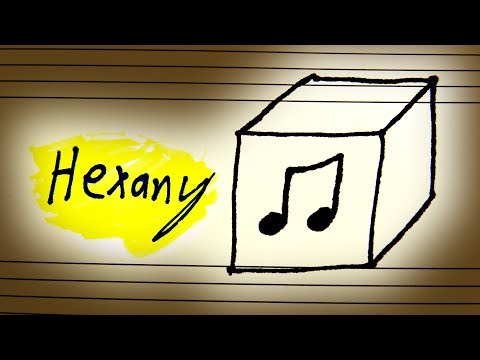

 For more infomation >> Questions Pas Bêtes 5 : Un chien peut pleurer ? - Duration: 4:27.

 For more infomation >> La Toyota Camry retrouve l'Europe - Duration: 3:07.
 For more infomation >> Volvo - Un XC90 100% électrique est en préparation - Duration: 3:18.
  For more infomation >> Brigitte Macron déchaînée pour la fête de la musique : la première dame a le rythme dans la peau - Duration: 2:07.
  For more infomation >> Wa Puray De Thandi Thaar | Muhammad Hussain Bandial | Best Punjabi Saraiki Song | Purani Yadain - Duration: 6:26.
  For more infomation >> Audi A1 Sportback 1.4 TFSI Pro Line S-Tronic NAVI BT XENON PDC STOELVERW. '12 - Duration: 1:06.

 For more infomation >> L'eau d'ananas, un amincissant naturel que vous devriez essayer … Vous n'allez pas le regretter - Duration: 5:26.
  For more infomation >> Mercedes-Benz V-Klasse V 250 d Edition XL Automaat - Duration: 0:54.
  For more infomation >> Porsche Cayenne 3.0 D PLATINUM EDITION AUT, Panodak, Sportleer, Navi, DVD, Full - Duration: 0:55.
  For more infomation >> Pourquoi faire preuve d'EMPATHIE en SELF DÉFENSE ? - Duration: 2:42.

 For more infomation >> [YDS] • PAY NO MIND MEP - Duration: 4:01.
  For more infomation >> femmes jettent leur produits cosmétiques quand elles découvrent cette recette qui efface les rides - Duration: 8:09.



 For more infomation >> Facebook Ads Beginner to Expert in 1 Video | How to Create Facebook Ads in 2018 - Duration: 1:54:07.
 For more infomation >> 海贼王:路飞、黑胡子或将联手,他们已经拥有了一位共同的敌人! - Duration: 4:19.
  For more infomation >> 헬멧 가격이 5억원? F-35 증강현실 최첨단 헬멧 - Duration: 6:28.
  For more infomation >> Lexus NX 300h AWD F Sport Line - Duration: 1:14.
  For more infomation >> Reducing Carbon Footprint - Duration: 8:05.
  For more infomation >> (VOSTFR) ASTRO 아스트로 - 2018 ASTRO GLOBAL FAN MEETING IN USA EPISODE 7 - Duration: 6:48.
  For more infomation >> Fans pay respects to XXXTentacion after fatal shooting - Duration: 1:59.

No comments:
Post a Comment