[piano music]
Thank you, uh, the organizers, uh, giving-giving me a chance to talk here,
uh, let me start.
So I'm going to talk about tsunami, genetics, and the medical care.
So, five years ago,
uh, we've encountered a quite big earthquake, and tsunami.
And, uh, the, um, my university's located around here,
the Tohoku University responsible for the northeast part of Japan,
and the epicenter is quite close to our university.
And the earthquake, uh, after [inaudible] killed all--
killed and washed away almost more than 18,000 people in this area.
And, uh, the, the-we got the quite a lot of help from the-all over the world,
including U.S.A.
U.S. armies and navies clean up our airport, uh, helped us a lot.
Uh, so we thank for the help.
Okay, so, after the [inaudible],
uh, six key community-community hospitals are washed away,
and quite a lot of, uh, disaster for the community medicine.
And, uh, actually we lost, uh, we couldn't find, uh, the way we can think about worldwide.
This one, the Ishinomaki Red Cross was found, the-they-the day, uh, one day after the earthquake,
and this is well hospital, uh, they including the medical staffs.
74 people passed away in this hospital.
So, uh, we've been worked uh, for the recovery.
And, uh, what I find, the-we've discussed what we can do
and finally we decided to welcome the creative regeneration.
Sorry for the-the messy, uh, presentation.
So, creative regeneration,
we decided to create an attractive and thriving center of innovation,
and using this activity we're gonna welcome the creative, uh, regeneration.
This is, uh, two weeks after the tsunami and we felt, we felt we would survive.
So we've discussed the creative regeneration in this, uh, meeting.
Now, the...to think-to realize the creative regeneration,
uh, we've proposed, uh, one project, uh, called Tohoku Medical Megabank Poject.
The issues we-we have to think about at this moment is,
the first one is support the people who suffer from tsunami.
And long-term follow up.
The second thing is the paper shelter are all washed away,
we couldn't get any shelter recovered.
So, we really need to build a stronger medical communication and recording system,
EHR system.
The third one is, uh, I think the situation is probably the same,
the coastal area, northeast of Japan,
uh, from the beginning we are lack of the doctors and medical staffs.
So we really need to think about some way to, uh, to attract the doctors, uh, to this area.
So, for that purpose,
uh, we've, uh, brung the large scale cohort and the integrated bio-bank,
and also the personalized health care.
And the answer is the Tohoku Medical Megabank Project.
So, the Tohoku Medical Megabank Organization,
we've established this organization one year after the tsunami 2012, February.
And the nickname is ToMMo, uh, tomo you know, tomogatchi, we are the friend of those people,
and we wished to deliver the most advanced medicine to the people
who suffer from the tsunami and earthquake.
But then we need to ask, what is the most advanced medicine.
And our discussion then, the answer is this.
Personalized healthcare and personalized medicine.
And, uh, for to realize the personalized medicine, PHC,
or pre-emptive medicine,
we need our body.
And the blueprint of our body is genome. DNA.
So we need the genome study.
So, to realize the personalized healthcare, PHC, and the personalized medicine,
we need the strong basic science,
and also genome cohort study, and complex biobank construction.
And using this, uh, technology, this, uh, basi-basics,
we'll construct a long-live country.
This is Japan's national goal.
And for me, one important thing is to accomplish the-the, uh, the creative regeneration
through the-the constructing the Tohoku Medical Megabank.
And including the advanced industry, or the creative reconstruction.
Now, the, I told you the genome cohort study,
and, genome cohort study is an important, uh, for our fight against the common disease.
So, the-the-the difficult diseases we're gonna fight is the-the disease,
uh, which originated through the interplay
between the genetic and the environmental events.
And genome cohort study, okay,
genome cohort study is an important, uh, means to fight against these diseases.
So, the...we sta-started to do genome cohort study.
In this case, cohort means the peoples', uh, [inaudible].
And we cannot recuit the people,
in this case, healthy people,
and follow-up long time.
Statistically, some of them will develop a disease.
Then, we can study a cause, and, and the result, uh, through the follow-up.
And the genome study integrated into there,
that type of the study we usually call genome cohort study.
Okay, now, I'm gonna tell you what type of cohort studies
are operating in our ToMMo organization.
So, we are running two types of cohort, one is a community cohort.
And for this purpose we are gonna recruit 80,000 people
from the tsunami sufferer area.
And the second one is the birth and three-generation cohort.
I'm gonna tell you why we established these two types of the cohort.
Anyway, the birth and three-generation cohort,
we first recruit the pregnant mom. Pregnant mom.
Then the babies for sure will follow.
And here's only half of the husband here.
This doesn't mean the Japanese husband are cruel.
[laughs] The-the husband are usually busy.
And also the grandma and the grandpa.
So, the, uh, one, two, three generation, uh, cohort start from the birth.
And we are planning to recruit 70,000 of these.
And, uh, last month, uh, two months ago,
we've accomplished 130,000.
We are planning to recuit a total of 150,000 and one more years to go,
so we are sure almost we can do that.
And if I speak about this birth and three generation cohort,
your NIH, uh, was planning the National Children's Cohort,
a similar type of cohort,
but some of you probably know this is very difficult. Very difficult.
So, we've finished more than 15,000--
more than 18,000 pregnant moms already,
that's a great accomplishment.
So, the reason why we've designed, uh, two cohort,
is the, the reason is, we need to overcome missing heritability.
Missing heritability means, uh, this concept.
Usually, we can see several disease, many diseases,
which the inheritence is apparent, obvious.
But, all those diseases, the inheritance is obvious,
still, we can't know, we don't know, we can't know which gene is responsible.
We call that phenomenon missing heritability,
and to overcome the missing heritibility,
we can approach, uh, two-- we have two approaches,
one is increase in number the cohort.
So, in the UK, England, UK biobank,
uh, 500,000 people to recruit.
The second way is the one using in the Iceland deCODE study.
That's, uh, uses the family relationship, family pedigree.
So, we-we decided to adapt the family approach, the-that approach.
So we first, uh, made the residential cohort,
and, honorize the fourth genome.
Make the difference pan out.
Then make the Japonica array, uses this information,
these three-generation cohort, for familiar invitation.
And finally, uh, make the association of the gene and disease.
Kay?
So, let me tell you a little bit of the biobank.
Biobank is a system that collect, storage, distribute human samples
and related information for advancement of medicine and sciences.
And we've already collected, we usually collect 15 samples from one, uh, participant.
And we've already, uh, finished two million sample storage from 130,000 people.
And the...we usually collect 34 milliliter blood from one participant.
Still, that's a certain amount of the blood,
but still, we are afraid sometime,
if we start a distribution, the, uh, blood samples,
or other samples will deplete.
So, to avoid the depletion of the samples,
we've, uh, invented the system called integrated biobank.
So the integrated biobank usually--
uh, not usually, this is the first attempt.
So, integrated biobank have-have analytical center,
and we do the, the standard analysis of the samples by ourselves.
And, to avoid rapid depletion of samples,
ToMMo distribute analysis information first. Information first.
And, if they really need, if people really need
we're gonna distribute these samples.
So, we collected blood and urine, genomic DNA,
and analyze the metabolome protein, genomics, epigenome, transcriptome,
and also we are, uh, operating the MRI examination for the participant.
Okay, so, let me tell you little bit of the genome analysis.
So, uh, from the, the residential cohort participant,
we selected 1,070 first,
and determined the full genome sequencing.
Uh, full genome sequencing is operated in a single laboratory,
single protocol, single facility with high coverage, more than 32x.
And this is the first in the world.
And we've, uh, uh, catalogued more than 21 million SNVs.
And we checked the-these 21 million, uh, we compared it, these, uh, SNVs, the SNV,
single-nucleotide variations, to the database data.
Database data, are almost all from the caucasians, your data.
So when we compare them, we found 12 million is a new single nucleotide variations.
This means either Japanese are new species [audience laughs]
or-or-or, the different interpretation is ethnic difference is this much big.
So we need the genome reference that are for each ethnics.
That's the conclusion.
And we've opened this 21 million SNVs to the public,
open to everybody in the world.
So, by using the ToMMo four genome variation data base,
uh, we can do various things. So the bes-most, uh, important one is, uh, this one
that will facilitate the clinical sequencing.
So the, the very, uh, difficult to diseased patients' full genome sequencing,
if the mutations or if the variations can find in our data base,
then it's not the cause of the disease.
So this is very important to reference.
The second thing is we can, uh, develop the segmented drug develop-development.
And the third thing is, we gonna challenge the personalized health care
by use-making the ethnic array.
So what is ethnic array?
The ethnic array, DNA array, highly adopted for Japanese,
so we made this one based on the-the high quality,
uh, Japanese, uh, full genome sequencing data base.
And, uh, this is minimize the probe number,
but, enable the genotype, uh, the full genome, uhhh, genotyping
through the genotype imputation, and quite inexpensive.
And we marketed this one, uh, through, we've licensed this one through Toshiba,
and this one is now in the use in Japan.
So, the Japonica array,
usually the full genome sequence, it's getting cheaper,
but still, it's cost 2,000 dollars, 3,000 dollars, it's expensive.
Well, Japonica array, it's only 100 dollars, or 200 dollars.
And, we can't see these part, because this is a cheap one,
so, can't cover the everything,
but using the difference panel, and the idea of the linkage disequilibrium,
we can, uhh, the imptate--impute, these unknown-unknown, uh, SNVs, right, this way.
So, Japonica array desi-designed to maximize the capacity of genotyping imputation,
and by providing low cost full genome sequencing information
by this genotype imputation,
and this will realize mega-sized survey of the genome
responsible common diseases for Japanese.
So, okay. I'll stop. Alright.
So, the-the, we made the integrated database. Integrated database...ooh, sorry.
Intergrated database contains.....
uh, contains the old genome-genomic information,
and also the-the clinical data, or hearsay informations and also knowledge-base.
So this is the center for our biobank, medical megabank.
So, last one minute.
Uh, the megabank manager, like me, director, like me,
is always melancholic. Depression. Under the depression.
The reason is, the budget, uh, for the secured managment is always difficult.
We are receiving various money, but it's uncertain. And other-other reasons.
So, the international collaboration is very important.
That's the reason why I am coming here, I am coming here.
So, we've been collaborating with the U.K. biobank,
Life-lines cohort in Netherland,
that Karolinska Institute, [inaudible] Taiwan biobank.
So, the big, uh, biobank need international collaboration.
Okay, let me finish.
So, when I-I've proposed this one and started
only several people, you know, agreed with me and working together,
but now we have 400 members, and, uh, working together.
Thank you very much.
[piano music] [applause]


 For more infomation >> Audi A3 Sportback 2.0 TDI S LINE EXCL BPM EXPORT - Duration: 1:02.
  For more infomation >> Ford S-Max 203 Pk automaat! 2.0 ECOBOOST S EDITION Business Pack Clima,Navi,Leder,Panoramadak etc - Duration: 1:01.
  For more infomation >> Suzuki S-Cross 1.0 Boosterjet Rhino - Duration: 0:56.
  For more infomation >> Audi A4 Avant 3.0 TDI QUATTRO S-LINE NAVI LEDER SCHUIFDAK AIRCO XENON LMV TREKHAAK - Duration: 1:01.
 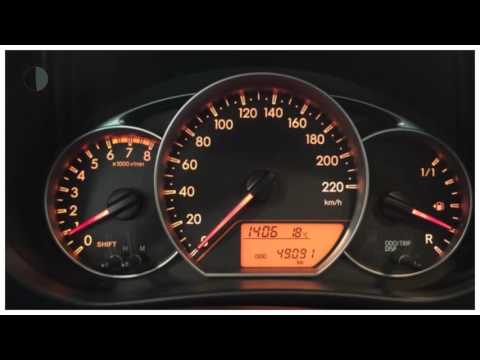 For more infomation >> Toyota Verso-S 1.3 VVT-i Aspiration - Duration: 0:59.
 For more infomation >> Opel Astra Sports Tourer CDTi 131pk Sport Cosmo TrHaak 17"lmv Led Ecc Tel. S/S Cosmo - Duration: 1:00.
  For more infomation >> Opel Astra Sports Tourer D131pk Leer Navi Sport st. Ecc Led Lmv Ecc Pdc Pr.Gl. Tel. CDTi S/S Cosmo - Duration: 0:56.
  For more infomation >> kid tries to slam dunk and breaks his arm (gone wrong) - Duration: 5:11.
  For more infomation >> EL PEZ ARCOIRIS - Cuento infantil - CUENTACUENTOS - Cómo ayudar y compartir - Duration: 6:47.
  For more infomation >> Toyota Aygo 1.0-12V ACCESS 5DRS AIRCO LMV STUURBEKR - Duration: 0:59.
 For more infomation >> ¿Tiene el Universo Forma de Donut? - Duration: 6:50.
  For more infomation >> Poslanec dr. Dragan Matić: V SMC želimo kulturo in turizem čedalje bolj povezati - Duration: 1:40.
  For more infomation >> Comment faire pour qu'un cheval vous aime? - Duration: 7:46.
  For more infomation >> COMMENT NE PAS SE FAIRE ARNAQUER EN IMMOBILIER - Duration: 10:36.
  For more infomation >> ❄ ASRM - Des Pas Dans La Neige Pour Relaxation - Sommeil - Bruit Promenade Dans La Neige ❄ - Duration: 1:04:04.
  For more infomation >> Toyota Avensis Wagon 2.0 D-4D LUNA BUSINESS - Duration: 0:58.
  For more infomation >> Toyota Corolla Verso 2.0 D-4D SOL | CLIMATE CONTROLE | CRUISE CONTROLE | ELEK RAMEN - Duration: 1:00.
  For more infomation >> Colonisation et Histoire de l'Algérie française - Duration: 4:06.
  For more infomation >> Lord Aarti Om Jai Jagdish Hare - Duration: 12:04.
  For more infomation >> Teaser Aquiwee 2017 - Duration: 5:50.
  For more infomation >> Guru Aarti Om Tare Tu Tare Tu Re So Ha - Duration: 16:17.

 For more infomation >> '프로듀스 101' D-1..지하철 광고판에도 불붙은 프듀101 응원전 - Duration: 9:33.
  For more infomation >> Volvo V70 bjr 2010 2.0T 149kW/203pk Aut6 R-EDITION PLUS CLIMA + CRUISE + ADAPT.BI-XENON + SPORTLEER - Duration: 1:00.

No comments:
Post a Comment